Wednesday, 29 August 2012


Friday, 3 August 2012
Flowering time for the Frog Orchids
Friday 3rd August 2012
A reconnaissance up to Upper Ribblesdale this week found the Frog Orchids in full flower but numbers appeared to be down on last years, I don't know the reason but may be they're swamped with the tall grasses that have flourished this year owing to the wet summer. We counted around 20 flowers this year compared to well over 100 last July. We visited 2 areas today .... Horton in Ribblesdale and Ribblehead.


 This Frog Orchid is much paler and greenish in colour
 One solitary Twayblade with Phen-y-gent in the distance

Up at Ribblehead on the Ingleborough nature reserve, a couple of very late Bird's Eye Primroses a small group of Marsh Helleborines and there's going to be a good show of Autumn Gentians.
 Bird's Eye Pimrose

 Marsh Helleborines

 Autumn Gentians


Up at Ribblehead on the Ingleborough nature reserve, a couple of very late Bird's Eye Primroses a small group of Marsh Helleborines and there's going to be a good show of Autumn Gentians.


Monday, 30 July 2012
A good year for John Williams
Monday 30th July 2012
After the technical brilliance of the Olympic opening ceremony and the exciting sporting events of the first two days a quick visit to John Williams and his Moorland Garden for a little relaxation and peace in this special place. I've posted blogs previously on John's very special garden which he has created over the last 36years in this harsh moorland environment near to Hebden Bridge in West Yorkshire.
Even though the weather has been cloudy and wet John's 7acre garden this year has thrived and is reaching it's peak this week. With the planting of trees many years ago this is now a sheltered garden and can only be described as an oasis with it's own micro climate in a cold moorland Pennine valley.


 John's speciality......Himalayan Lily (Cardiocrinum Gigantium)


 John can be seen reading his paper on his front patio


 With a little help from John, a moss garden is developing in his restyled newer garden on the western side of his house, this wet cool climate is ideal for mosses
 So if ever you are up in this part of the world pay a visit to this delightful garden, you won't be disappointed.
After the technical brilliance of the Olympic opening ceremony and the exciting sporting events of the first two days a quick visit to John Williams and his Moorland Garden for a little relaxation and peace in this special place. I've posted blogs previously on John's very special garden which he has created over the last 36years in this harsh moorland environment near to Hebden Bridge in West Yorkshire.
Even though the weather has been cloudy and wet John's 7acre garden this year has thrived and is reaching it's peak this week. With the planting of trees many years ago this is now a sheltered garden and can only be described as an oasis with it's own micro climate in a cold moorland Pennine valley.


Friday, 27 July 2012
The 3 Year Search Is Over
Friday 27th July 2012
On the eve of the Olympic Games I've all ready triumphed this week. After searching for 3 years for the Dark Red Helleborine in suitable habits in the Yorkshire Dales I've Finally found it.
On a wet misty day in N.W. England whilst the rest of England was enjoying a mini heatwave, Eric, Peter, myself and my wife searched the limestone area known as Heslington Barrow west of Kendal. On the limestone screes and always near to Larch Trees we found several plants not in their best condition owing to the 3 days of continuous rain that had fallen in the area.
Eric and Jean found the seeded flower spikes in the same area at the end of August last year so we knew where to look, it was a case of of being at the right location at the time of flowering.
 Along the edge of Heslington Barrow

 More shots for my orchid video diary

 This is about the best shots we can obtain in difficult low light conditions

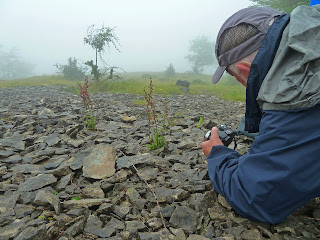
 Not the most comfortable ground conditions to lay on
 More flower spikes in the Larch Wood
 The Dark Red Helleborines growing amongst Wood Sorrel
On the eve of the Olympic Games I've all ready triumphed this week. After searching for 3 years for the Dark Red Helleborine in suitable habits in the Yorkshire Dales I've Finally found it.
On a wet misty day in N.W. England whilst the rest of England was enjoying a mini heatwave, Eric, Peter, myself and my wife searched the limestone area known as Heslington Barrow west of Kendal. On the limestone screes and always near to Larch Trees we found several plants not in their best condition owing to the 3 days of continuous rain that had fallen in the area.
Eric and Jean found the seeded flower spikes in the same area at the end of August last year so we knew where to look, it was a case of of being at the right location at the time of flowering.


Tuesday, 17 July 2012
A little more culture
Tuesday 17th July 2012
We're just back from 10 days in East Anglia and because of the unsettled weather we've visited the city of Cambridge for 3 days our first ever visit to this University City, enjoying the atmosphere around the well known sites. We stayed on the Cherry Hinton Caravan Club Site in an old limestone/chalk quarry, a site of scientific interest on the outskirts of Cambridge so we were never far from the countryside that surrounded the site.
 The old quarry adjacent to the caravan site, it has become a natural wild flower reserve.
 Wild Thyme
 Birdsfoot Trefoil
 King's College

 King's College Chapel
 Just a few of the cities 35 thousand bikes
 We couldn't help smiling at this street busker
 Punting on the River Cam


 Cambridge University Botanic Garden


 In a wild corner of the gardens a small stand of wild Southern Marsh Orchids
Moving on now to the north coast of Norfolk....
 Wells Next The Sea
 The beach and beach huts
In an old flower meadow along the back of the beach 100's of wild orchids, an absolute dream for any orchid enthusiast.

 Common Spotted Orchid
 Marsh Orchid Hybrids ( crosses with either Southern or Northern Marsh Orchids very difficult to identify)

 I'd like to think we've found the rare Pugley's Marsh Orchid, it grows in Norfolk, it's a loose flowering orchid with not many flowers usually 5 to 14 and they generally grow more on one side of the flower stalk but it's a bit late in the season to be still in flower.
 A beautifully marked small Common Spotted Orchid
 Another Orchid...... The Marsh Helleborine

 Marsh Helleborines and white Common Spotted Orchids

 The length of these orchid spikes.... 5 to 6 inches
 The coastal village of Burnham Overy Staithe
 WIld flowers on the coastal sea defences
 More Marsh Helleborine on theHolkham National Nature Reserve


 Henbane..... a flower I've never seen before
 The wild unspoilt Holtam Beach in North Norfolk, I love these wide horizons


 Morston Key...... the starting point for the sail out to Blakeney National Nature Reserve for the Seals and Tern colonies

 I like the loose style of this landscape artist.... using the Newton & Windsor artist colours


 Landing away from the seal & tern colony we had around one hour to explore the landscape on the nature reserve
 The old lifeboat station

 Our Boatman had another very talented skill, he had just finished on the previous night a wonderful carving of a seal using a chainsaw, then polished and varnished it to make it a very attractive focal point on the quayside


And finally near to the village of Blakeney.........a small notice about a bonanza of Bee Orchids that had sprung up in the local meadow, pity they were well past their best.


And now for an update and a few observations back home on our local wild orchids. At this mornings count I have 91 Common Spotted Orchids growing in my back garden Up in the field at the side of our house a colony of Common Spotted Orchids are growing on the local bonfire site.
 Around the bonfire site the Common Spotted Orchids

Up in the field the colony of Southern Marsh Orchids are thriving, they arrived about 3 years ago and are now hybridizing with the Common Spotted Orchids


On the local industrial estate in Burnley there's been a good show of Common Spotted Orchids on the grassy areas surrounding the industrial units The companies have been made aware of the orchids and don't mow the grass until early September to allow the seed to disperse.


 After searching along the sparse grassy verges we found one solitary Bee Orchid well past it's best
Finally I've noticed on the industrial site that the lips on some of the Common Spotted Orchids have developed a different shape (much narrower and they've lost their 3 wedge shaped lobes) that are usually easy to identify ,so perhaps these orchids are a slight mutation.
 The normal 3 lobed lip of the Common Spotted Orchid

 The much narrower lip, the 2 side lobes are greatly reduced.


Moving on now to the north coast of Norfolk....


In an old flower meadow along the back of the beach 100's of wild orchids, an absolute dream for any orchid enthusiast.


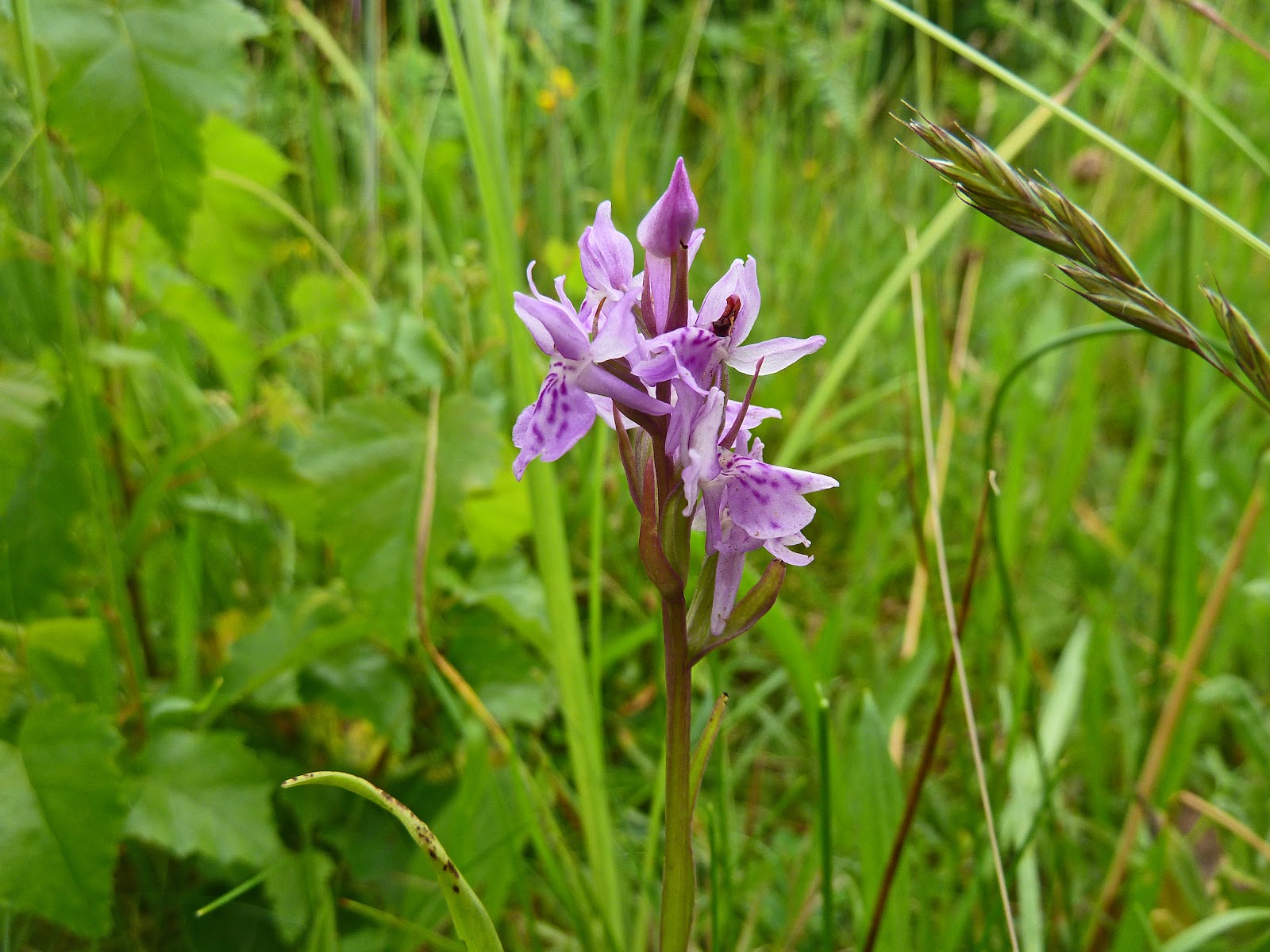





And finally near to the village of Blakeney.........a small notice about a bonanza of Bee Orchids that had sprung up in the local meadow, pity they were well past their best.


Up in the field the colony of Southern Marsh Orchids are thriving, they arrived about 3 years ago and are now hybridizing with the Common Spotted Orchids


On the local industrial estate in Burnley there's been a good show of Common Spotted Orchids on the grassy areas surrounding the industrial units The companies have been made aware of the orchids and don't mow the grass until early September to allow the seed to disperse.


Finally I've noticed on the industrial site that the lips on some of the Common Spotted Orchids have developed a different shape (much narrower and they've lost their 3 wedge shaped lobes) that are usually easy to identify ,so perhaps these orchids are a slight mutation.


Subscribe to:
Posts (Atom)


